

 Call us Today


What Is Intrinsically Safe Weighing?
Intrinsically safe (I.S) weighing refers to the use of weighing equipment that is designed to operate safely in hazardous environments where there is a risk of explosion due to the presence of incendiary materials. Intrinsically safe weighing scales are specialised weighing instruments that have been meticulously designed for this very purpose; they are certified for use in hazardous environments where flammable gases, vapours, or combustible dusts present a risk.
Intrinsically Safe Weighing Scales
Intrinsically safe weighing scales are vital for work in any environment where that’s high risk because of dangerous vapours, gases or combustible dust. Intrinsically safe weighing scales are needed to ensure safety by preventing any potential ignition sources, protecting both people and property in hazardous settings everywhere - from chemical plants and oil refineries, to paper mills and mining operations. They achieve this through a low-energy design that ensures any electrical energy within the system is insufficient to ignite flammable substances. The electronic components are also housed in specialised enclosures that prevent hazardous materials from entering and contain any sparks or heat. If you need to weigh products or goods in a hazardous environment, it is essential that you use IECEx compliant scales.
IECEx — which stands for the International Electrotechnical Commission Explosive Atmospheres — is the IEC (International Electrotechnical Commission) certification system for equipment used in explosive atmospheres, ensuring safety by meeting strict requirements. It offers testing, certification for equipment and personnel, and is endorsed by the UNECE as the global best practice model for verifying conformity to international standards for explosive environments. The Australian equivalent of ATEX is the AS/NZS 60079 series, which aligns with the international IECEx standards. These standards provide guidelines and certification for equipment used in explosive atmospheres in Australia and New Zealand, ensuring that it meets safety requirements to prevent explosions in hazardous environments.
IECEx scales can provide accurate measurement capabilities while maintaining high safety standards in dangerous environments. Intrinsically safe weighing scales that are approved are also built to withstand harsh conditions, including exposure to corrosive substances, extreme temperatures, and high humidity.
What Does "Intrinsically Safe" Mean?
As the name implies, intrinsically safe scales are designed to be safer than their non-intrinsically safe counterparts. Intrinsically safe design ensures that weighing instruments can operate safely in potentially hazardous environments. This involves either eliminating oxygen (through inert gas purging) or isolating potential ignition sources. However, you cannot distinguish an intrinsically safe scale from a basic scale based on its external appearance; the key difference lies in its internal construction. If you’re weighing goods or products in an area that’s deemed hazardous (ie. any atmosphere with dangerous gas, vapour, dust or temperature) then you are required to use weighing equipment that is Intrinsically Safe.
The Importance of Intrinsically Safe Weighing Scales
Intrinsically Safe Weighing Scales provide you with a range of significant benefits, including:
- Enhanced Safety: The primary advantage is the assurance of safety in hazardous environments, reducing the risk of explosions and accidents.
- Cost-Efficiency: By minimising the potential for accidents, these scales can lead to significant cost savings for industries, avoiding the expenses associated with damage and downtime. These scales are also designed to ease use and reduce the need for repair, further reducing your long-term operational costs.
- Compliance: I.S. scales ensure compliance with stringent safety regulations while ensuring smooth operations in regulated industries. This keeps your company above board, which helps you avoid penalties while keeping your employees safe.
What Counts As A Hazardous Area?
A hazardous area is any location where there is enough explosive gas, dust, or vapor to potentially cause a fire or explosion. This can occur under both normal and abnormal conditions, such as in the event of a spill. For an explosion to take place, three key elements must be present:
- Fuel: Typically the liquid or gas being handled.
- Oxidizer: Usually oxygen in sufficient amounts to support combustion.
- Ignition Source: A spark or heat that exceeds the vapour's flash point.
Areas with potential fire or explosion hazards due to explosive atmospheres or mixtures are known as hazardous (or classified) areas. In Australia, we follow the Zone system for classifying hazardous areas, which is aligned with international standards such as the IEC (International Electrotechnical Commission) and ATEX (from the European Union). This system is used in Australia to classify hazardous locations based on the likelihood and duration of the presence of an explosive atmosphere, ensuring the appropriate safety measures are in place.
- Zone 0: An area where an explosive atmosphere is present continuously or for long periods.
- Zone 1: An area where an explosive atmosphere is likely to occur in normal operation occasionally.
- Zone 2: An area where an explosive atmosphere is not likely to occur in normal operation, but if it does occur, it will persist for a short period only.
Intrinsically Safe Scales: Approvals and Certifications
Different scales may carry different approvals and certifications; the ones to look out for as follows:
- ATEX Certification: ATEX certification is a European Union directive that ensures equipment used in explosive atmospheres meets strict safety standards to prevent ignition risks. It is mandatory for products used in hazardous locations within the EU.
- IECEx Certification: IECEx is an international certification system that verifies equipment and services used in explosive atmospheres comply with global safety standards, facilitating easier market access across different countries.
- FM Approval: FM Approval is a certification by FM Global that ensures equipment meets rigorous safety and performance standards for use in hazardous environments, particularly in North America.
- UL Certification: UL Certification is granted by Underwriters Laboratories and ensures that equipment used in hazardous locations meets specific safety standards to prevent fires and explosions, widely recognized in North America.
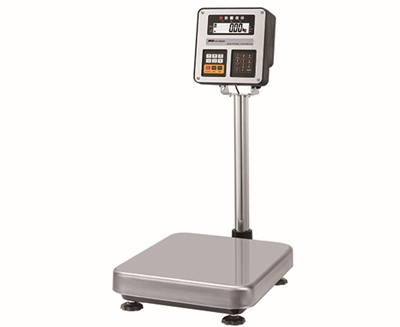
A&D Weighing HV-CEP Series weighing scales are compliant with IECEx standards, and offer an effective solution for various applications, including hazardous area weighing. Featuring high-speed measurement with a response time of just 1 second, they also come with auto-tare with negative comparison functions for accurate “take-away” check weighing. They are equipped with a highly visible LCD display with a 26 mm character height and white backlight, and settings are quickly adjusted using the alphanumeric keypad. Additional features include a key lock to prevent unauthorised changes, an IP65-rated dust and waterproof base unit with a stainless steel (SUS430) pan, and more.
What’s the Difference Between Intrinsically Safe & Explosion-Proof?
You’d be forgiven for thinking that intrinsically safe and explosion proof are the same thing, but there are some major differences between the two. Intrinsically safe scales are specifically designed to limit heat generation and prevent ignition caused by elevated voltage or current. Conversely, explosion-proof devices don’t need to inherently prevent ignition; instead, they are enclosed in a robust housing that can contain an explosion. If an explosion occurs within the device, the housing ensures that flames and gases cannot escape and spread throughout the facility. However, this results in a heavier, bulkier design, making explosion-proof devices more suitable for fixed installations.
The Benefits of Intrinsically Safe Weighing Equipment
Quality Intrinsically Safe weighing equipment offers the following advantages:
- The Highest Protection Level Available: Intrinsically safe weighing equipment is perfect for hazardous areas because it keeps the entire system secure, regardless of the weighing application. This technology prevents explosions by ensuring the energy transferred into a hazardous area is well below the threshold needed to ignite an explosion. It allows equipment to function safely without the risk of igniting flammable gases, dust, or fibres that may be present. When choosing weighing equipment for hazardous areas, it's important to consider the proper classification and ignition protection method. Using intrinsically safe weighing instruments ensures accurate results while providing the highest level of safety.
- Fast Installation: As intrinsically safe equipment does not require shutdowns or gas clearance certificates for maintenance, installation can proceed more quickly and with fewer procedural delays. The modular design of intrinsically safe systems also allows for easier and faster integration with existing infrastructure, reducing the complexity and time needed for setup, and the ability to perform maintenance without interrupting the power supply or requiring extensive safety measures means less operational downtime during installation, allowing for quicker deployment and minimal disruption to ongoing operations.
- Quick & Easy Maintenance: Intrinsically safe technology provides a versatile and modular solution for industrial applications in hazardous areas. It allows seamless communication between various components through specially designed interfaces. A major advantage is that it permits equipment maintenance in hazardous zones without needing to cut power or secure a gas clearance certificate, which is usually required for open flame-proof equipment. This is especially useful for instrumentation, where diagnosing faults on powered-down equipment can be more complicated and time-consuming.
Able Scale’s Intrinsically Safe Weighing Scales
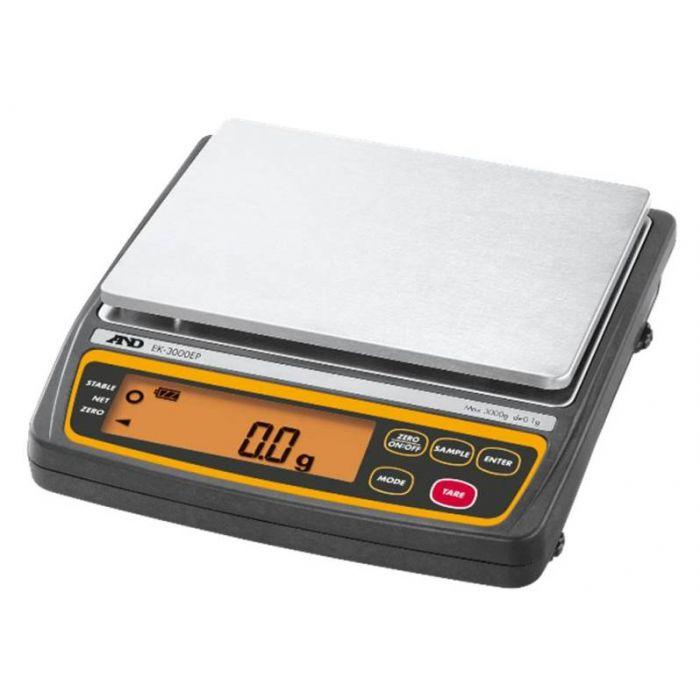
Intrinsically Safe Compact Balance - A&D EK-EP
The A&D EK-EP series of balances is specifically designed for use in hazardous areas and complies with IECEx standards, offering excellent explosion protection. Key features include a 16mm LCD display with backlight, approximately 250 hours of operation on AA batteries, and an auto power-off function. It also features a comparator function for precise filling, packing, and sorting, along with a chemically resistant stainless steel SUS430 weighing pan.
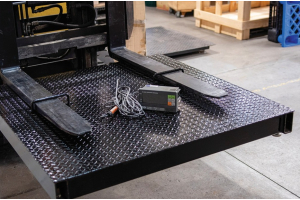
We also offer intrinsically safe weighing indicators, load cells and pallet scales with a variety of power supplies or external batteries, dependent on individual zone requirements.
Conclusion
Intrinsically safe scales are essential for ensuring safety in hazardous environments by preventing ignition risks from flammable gases, vapours, or combustible dusts, allowing accurate measurements without compromising safety. You can browse intrinsically safe weighing scales from Able Scale here. You can also check out Able Scale’s vast range of other products and resources here. At Able Scale, we take pride in providing high-precision scales for various industries. Our product line up includes electronic weighing scales, in-line metal detectors, and food scales, ensuring we have the right solution for your needs. Our selection of online scales and balance equipment includes industrial scales, trade approved scales, warehouse scales, platform scales and counting scales and many, many more. If you have any inquiries, don’t hesitate to get in touch with Able Scale directly via our contact page.
Have questions about our products and services?
We are here to help. Please fill in our online enquiry form below, and we will respond to you within the next business day.