Precision Balances Laboratory Balances A range of laboratory balances from top pan to more rugged high capacity industrial balances.
Precision Balances
Precision balances, also known as precision scales, are used for a wide range of applications, from laboratory sectors to the manufacturing industry. Precision balance scales are reliable and highly accurate weighing instruments with capacities ranging from 120 grams to 64 kilograms, and readabilities from 1 gram to 0.1 milligram. As such, they can be used for everything from counting and quality control to formulation and sample/standard preparation. Models with lower readability are typically equipped with a draft shield to ensure optimal performance, while high-capacity models feature a large weighing pan to accommodate heavier loads.
Precision Balance Scale Features
Precision balances are typically equipped with various features that cater across a wide variety of industry requirements and personal preferences. Such features commonly include:
-
High Precision: Precision scales are so named because of the high level of precision and accuracy they constantly provide, with resolutions often reaching down to milligrams or even micrograms.
-
Tare Function: Tare functions allow users to zero out the weight of containers or additional items, thus ensuring accurate measurement of the desired substance.
-
Unit Conversion: Precision scales that offer a unit conversion function that supports multiple units of measurement can make for extremely versatile equipment across different applications and industries.
-
Data Recording: Precision balances that come with data recording capabilities can be extremely beneficial for anyone aiming to conduct research or quality control, as they enable the user to store and analyse measurement data.
-
Calibration Options: To maintain accuracy over time, precision balance scales may offer various calibration options, including internal calibration or external calibration with calibration weights.
How are Precision Balances Used Across Industries?
With their wide selection of applications, precision scales have proven themselves useful across a range of industries, including:
-
Pharmaceutical Manufacturing: Precision balances are essential in pharmacies for accurately measuring and mixing substances used in the production of drugs and medicines. Exact measurements are crucial to ensure the quality and safety of the final product. These balances help pharmacies comply with necessary standards and regulations, ensuring consumer safety.
-
Educational: Owing to their reliable, error-free measurements, durability, and ease of operation, precision balance scales have become indispensable for teachers and students alike, and are thus commonly used for educational purposes in the fields of chemistry, biology, medicine, physics, and forensics.
-
Food Industries: As the food and beverage industries are governed by very strict standards and regulations, precision balances have become an essential component of ensuring that such industries can reliably comply with these standards.
-
Laboratory & Research Institutions: Within the fields of scientific research and experimentation, precision balance scales have become indispensable for accurately measuring chemicals, compounds, samples, and more. Balance scales can consistently provide precise measurements, ensuring the integrity and reproducibility of scientific results in both research and analysis.
-
Jewelry & Gemology: Gemologists and jewellers depend on precision balance scales for the precise measurement of precious metals. Precision scales allow for accurate determination of carat weight, ensuring fair pricing and quality assessment within the jewellery industry.
-
Veterinary Practices: Precision balance scales allow animal health professionals to monitor the health and growth of animals, ensure accurate medication dosages, and assist in diagnosing and treating various medical conditions. Larger precision balance scales are often used for weighing horses and other large animals.
-
Industrial Sectors: Precision balance scales offer many applications across the industrial sectors, including counting, formulation check weigting, and more.
Tips For Buying the Best Precision Balance Scales
The best precision balance scales for someone else may not be the best precision balance scales for you. Like so many other things in life, what’s right for you will ultimately depend on the particular needs of your vocation as well as the specificities of your individualistic preferences. But broadly speaking, there are certain aspects you should look out for when purchasing your next set of precision balances; key factors such as:
-
Capacity & Pan Size: Precision scales come in all sizes, and though it may seem obvious, it bears saying: always check that the scales are big enough to handle the items that you’re planning on weighing. Similarly, check that the pan size is large enough to accommodate the items being measured without compromising accuracy. Conversely, if you’re planning on weighing smaller and more delicate items, then you’ll want smaller scales for both practicality but also optimal accuracy,
-
Readability: Readability indicates the smallest weight increment the scale can detect, ensuring high accuracy for precise measurements, often down to milligrams or micrograms. Obviously, you’ll want a set of scales that delivers optimal accuracy with its readability, but keep in mind that the previous tip about scale capacity somewhat applies to readability too; if you’re planning on weighing smaller items, then you likely want to buy smaller precision scales for greater accuracy, as the resolution/readability of a scale is typically specified as a fraction of its maximum capacity.
-
Calibration: Like most things, scales require a little bit of upkeep, so it’s good to remember that regular calibration is a key aspect to maintaining a balance scale’s accuracy over time. Depending on how often you use your scales, you may wish to do routine calibration monthly, weekly, or even before each use.
-
Weighing Units: Precision scales with that support multiple units of measurement (eg. grams, milligrams, ounces, etc.), offer greater versatility for different applications and industry standards.
-
Special Features: Many scales include other special features that may be of use for you, such portability options for easy transport, overload protection to prevent damage, and weigh-below capacity for determining the weight of suspended items.
Why Choose Able Scale?
Able Scale is a family-owned and operated business, and our dedicated team boasts over 100 years of collective experience. We take pride in providing our customers with choice, quality, and expertise, and our goal is to deliver tailored solutions that meet a diverse range of business needs. By maintaining a diverse inventory of products from multiple brands, we ensure our customers have ample options and competitive pricing. You can browse Able Scale’s selection of precision balances here, or check out our wide range of other products here. Got a question? You can get in touch with us directly here.
FAQs
What is the accuracy of the precision balance scale?
The accuracy of precision balances depends on their trueness and precision. Trueness refers to how closely measurements align with the known mass of a calibrated test weight, while precision describes the consistency of measurements under identical conditions on the same balance. Repeatability, often listed on datasheets, quantifies precision and should not be conflated with readability. Readability, such as down to 0.1 mg for precision balances, provides an initial insight into performance but is not the sole indicator of accuracy.
How to weigh a sample on a precision balance?
First, ensure calibrations and routine tests are up to date and check that the balance is level. You may wish to consider wearing gloves to protect yourself and prevent sample contamination, depending on what you’re weighing. Next, zero the balance to establish a baseline and place your container centrally on the weighing pan to avoid errors. Press the tare button to record the container's weight separately, then add your sample until reaching the target weight, utilising features like a weighing-in guide for precision. Record the net weight of your sample once the balance stabilises, distinguish between tare, net, and gross weights as needed, and print or transfer your results. Then clean the balance and surrounding area.
Do precision balances and precision lab scales need windshields?
Precision balances do not typically need windshields. While windshields can certainly safeguard against environmental factors that might influence readings, precision balances are generally less susceptible to such disturbances compared to analytical balances because of their lower readability. This allows them to deliver precise measurements in many laboratory environments even without draft shields. Nonetheless, it remains crucial to verify that your particular setting and application can maintain accurate readings without a windshield.
What is the smallest & maximum load I can weigh on my precision balance?
The minimum load a laboratory precision balance can measure depends on its readability. Some high-precision balances can measure weights as small as 0.001g. The capacity of your precision balance determines the maximum load it can handle — the maximum load includes both the container and the sample being weighed, with some precision balances offering capacities ranging from 120g to 64kg. If you’re unsure about which precision balance is best for you, or you’d like more information about a specific make and model, you can get in touch with our friendly support staff here.



 Call us Today
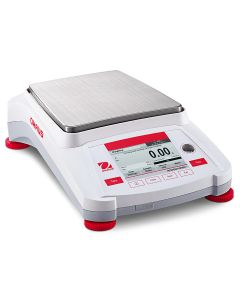 Touch Screen Precision Balance - Ohaus Adventurer AXA trade approved precision balance, with colour touch screen up to 8200g.
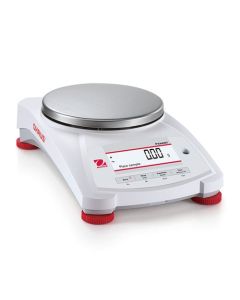 Precision Balance - Ohaus Pioneer PrecisionA versatile precision balance for basic weighing up to 8200g and readability...
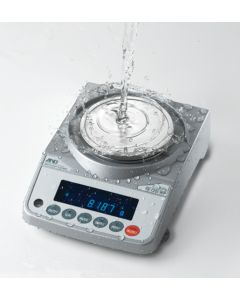 Waterproof Precision Balance - A&D FXiWPA range of precision balances water and dust proof to IP-65.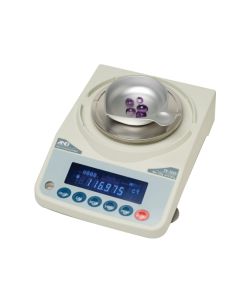
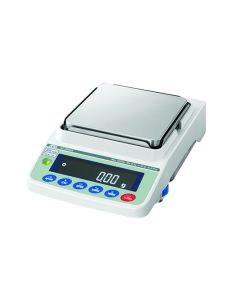 Trade Approved Precision Balance -A&D GX-A SeriesA trade approved range of precision balances from 220g to 10200g with internal...
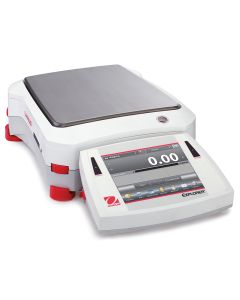 Professional Precision Balance - Ohaus Explorer Precision EXAn easy to use balance with all the features of a high end laboratory balance.
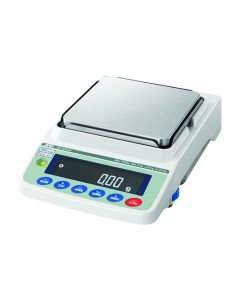 Trade Approved Balance - A&D GF-A SeriesA range of precision balances with manual calibration.
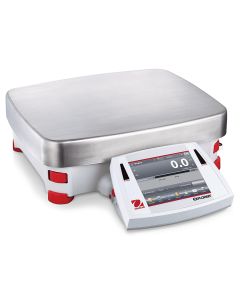 High Capacity Balance - Ohaus Explorer PrecisionA range of large capacity balances up to 35000g x 0.1g.
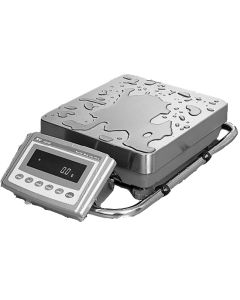 High Capacity Precision Balance - A&D GP SeriesA range of high capacity balances with internal calibration, IP65 and approved...
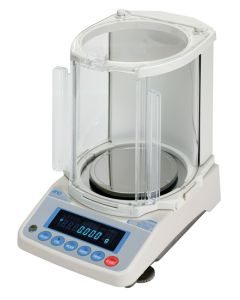 Trade Approved Precision Balance - A&D FZ-i SeriesA top of the line balance at an affordable price, with a compact B5 size...
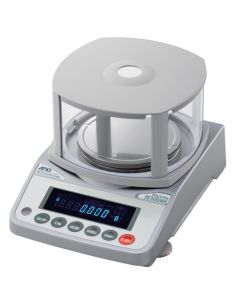 Trade Approved Waterproof Precision Balance -A&D FZ-i WP SeriesAn IP65 rated balance resistant to spills.
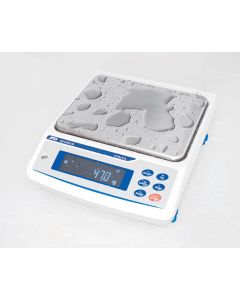 Industrial Balance - A&D GX-MA range of high capacity balances with internal calibration, IP65 rated.


