

 Call us Today


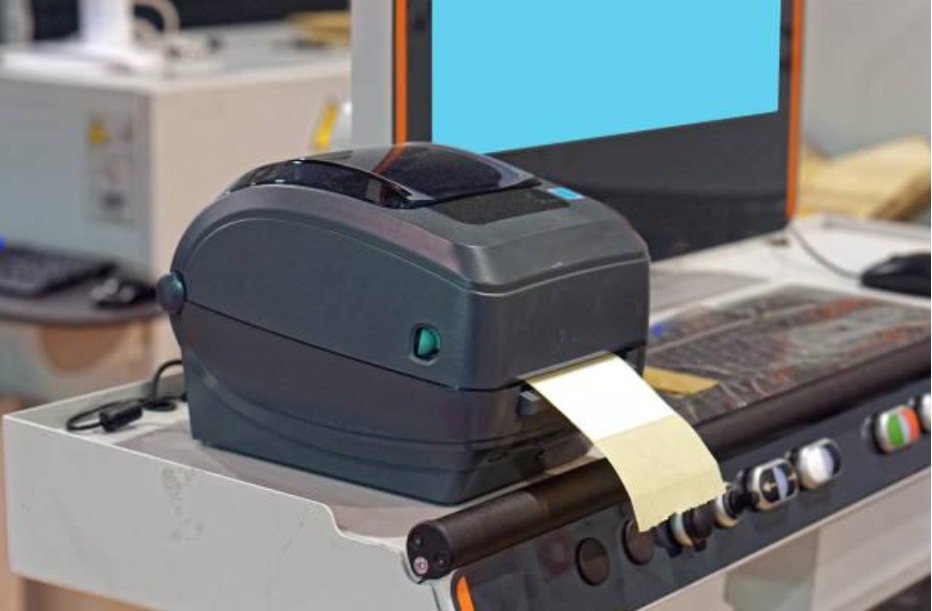
Label printers are essential in many warehouse environments. These industrial printers help people identify and organise inventory, ensure the correct handling of goods, and generally keep operations running efficiently. Accurate labels help prevent misidentification, ensuring smoother order fulfilment and fewer costly mistakes. A good desktop printer will allow for fast, on-demand label printing, reducing manual labour and human error while streamlining tasks like shipping, receiving, and inventory management.
Selecting the right label printer for your warehouse is therefore a critical decision that requires careful consideration. Versatile printers offer customisation for various label sizes, formats, and designs, supporting branding, compliance with industry standards, and clear communication. With the wide variety of printers available on the market, choosing the best one for your specific needs can be challenging. But we’re here to help! This guide has been designed to serve as a practical roadmap, helping you make an informed purchasing decision so you can ensure smooth, reliable printing operations. Scroll on down to learn more, or browse label printers here.
Understanding Printer Categories
Industrial label printing is an ever-evolving process. Although it has undergone significant changes over the years, like any other technology, it continues to advance with every new product and technological development. As such, the options can prove to be a bit daunting to the uninitiated; so here’s the quickest and simplest way to break down your options…
Economy Printers
Economy printers are ideal for small-scale labelling needs or occasional use.
Best for: Businesses or operations with low daily printing volumes, typically under 500 labels per day.
Typical uses: Small shops, occasional labelling tasks, office environments, or situations where label printing is not a primary activity.
Pros: These printers are affordable, easy to operate, and have a compact design that fits well in limited spaces. They are suitable for users who need a simple, no-frills solution for occasional printing.
Cons: Economy printers generally have lower printing speeds and are not built for continuous or heavy-duty use. They may not handle high volumes efficiently, and their durability is limited compared to more robust models.
Medium-Duty Printers (Desktop Printers)
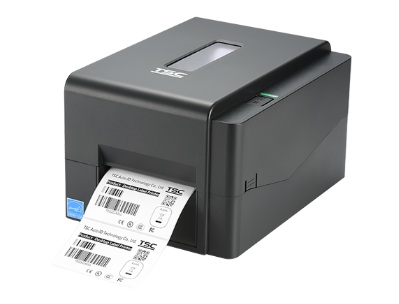
Medium-Duty Printers or desktop printers are designed for growing businesses or environments with moderate label volumes.
Best for: Operations with medium printing volumes, ranging from 500 to 3,000 labels per day.
Typical uses: Growing businesses, mid-sized warehouses, retail stockrooms, and other environments that require more frequent label printing while maintaining cost efficiency.
Pros: Medium-duty printers provide a balanced combination of cost and performance. They offer faster printing speeds than economy models and greater durability, making them suitable for daily use in moderately busy environments.
Cons: These printers typically have a higher upfront cost than economy models. While more durable, they may still require occasional maintenance if used extensively.
Industrial Printers
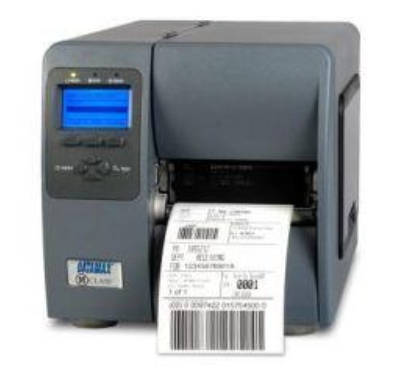
Industrial printers are built for high-volume operations that demand speed and durability.
Best for: High-volume operations that print more than 3,000 labels per day.
Typical uses: Large-scale manufacturing facilities, logistics centres, major retail operations, and other settings that demand continuous, high-speed label production.
Pros: Industrial printers are built for extreme durability and can handle continuous operation without performance degradation. They offer high-speed printing, advanced connectivity options, and robust support for a wide variety of label materials and sizes.
Cons: These printers have a high initial purchase cost and require significant workspace. They also demand regular maintenance and skilled handling to ensure long-term reliability.
Comparison Table
| Feature | Economy Printers | Medium Duty (Desktop) Printers | Industrial Printers |
| Recommended Daily Volume | Under 500 labels/day | 00–3,000 labels/day | 3,000+ labels/day |
| Typical Uses | Small shops, occasional labelling, office use | Growing businesses, mid-sized warehouses, retail stockrooms | Manufacturing, logistics, large-scale retail operations |
| Pros | Affordable, easy to use, compact, simple operation | Balanced cost and performance, faster printing, better | Extremely durable, high-speed printing, supports continuous operation, versatile for various label types |
| Cons | Slower speeds, not suitable for heavy-duty use | Higher upfront cost than economy models, occasional maintenance needed | High purchase cost, requires space, requires regular maintenance and skilled handling |
| Ideal For | Small businesses, offices, occasional users | Mid-sized businesses, warehouses, retail stockrooms | Large enterprises, manufacturing plants, logistics centres, high-volume retail |
How to Decide Which Printer Fits Your Needs
Selecting the right label printer is essential for optimizing your business operations, and several key factors should guide your decision to ensure the printer aligns with your specific needs. First, assess your daily label printing requirements. Printers are typically categorized based on capacity: economy printers are suitable for low-volume needs (under 500 labels/day), medium-duty printers are ideal for moderate volumes (500–3,000 labels/day), and industrial printers are designed for high-volume operations (3,000+ labels/day).
Next, consider the total cost of ownership, including consumables such as labels and ribbons, as well as maintenance expenses. Direct thermal printers generally have lower running costs since they do not require ink or toner, while thermal transfer printers produce more durable labels but may have higher consumable costs. It is also important to evaluate essential features such as printing technology (direct thermal vs. thermal transfer), print resolution for detailed labels, connectivity options including USB, Ethernet, Wi-Fi, or Bluetooth, and durability, particularly for industrial environments. These features directly impact print quality, speed, and integration with existing systems.
Finally, consider long-term scalability. Choose a printer that can accommodate future growth, including the ability to handle increased print volumes, support for various label sizes, and compatibility with evolving software and systems. By carefully evaluating daily volume, cost, required features, and scalability, businesses can select a label printer that meets current needs while supporting efficient, reliable, and scalable operations over the long term.
Conclusion
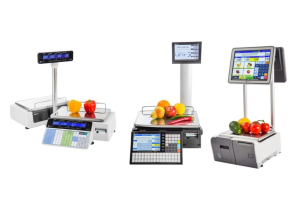
Selecting the right barcode label printer is a critical decision that directly affects the efficiency of your business operations. Effectively, the higher your daily label output, the more robust your printer should be. By carefully considering the factors outlined above, you can choose a printer that meets their specific workflow requirements. Investing in the right label printer will reduce breakdowns, maintain print quality, and ultimately save you time and money. You can also explore our range of label printing scales here, or check out our many other products and services here. For all inquiries, don’t hesitate to get in touch with us directly via our contact page.
Have questions about our products and services?
We are here to help. Please fill in our online enquiry form below, and we will respond to you within the next business day.