

 Call us Today


What is Barcoding?
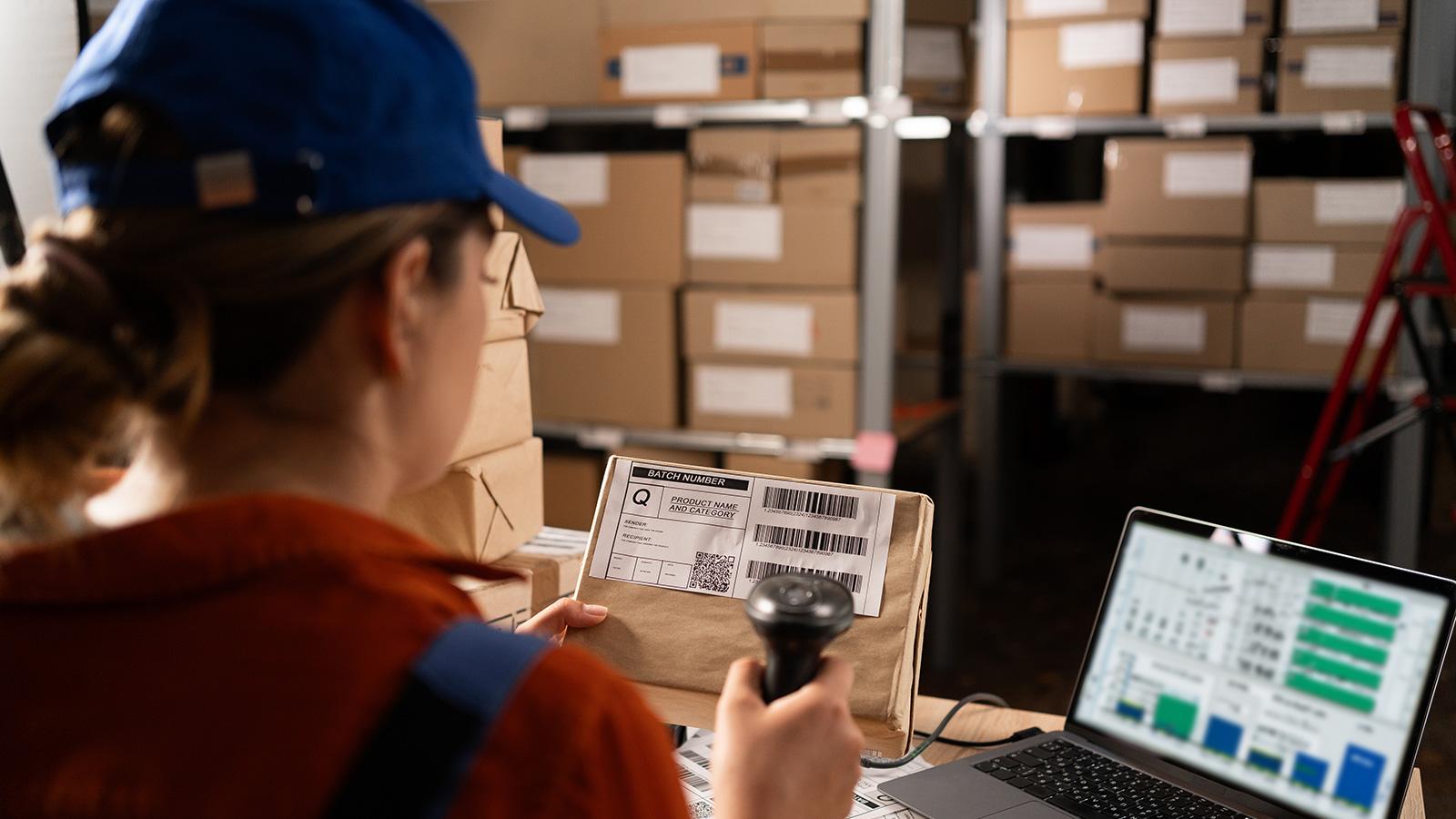
Barcoding is a method used by countless companies; when a barcode is scanned, it offers fast and precise information, such as details about an item's price, manufacturing location and date, and the business that produced it. A 1D barcode is an image consisting of vertical lines and spaces of varying widths; these lines and spaces encode data horizontally from left to right. Conversely, 2D barcoding is when the image is composed of dots, squares, rectangles, and hexagons. 2D barcodes store data both vertically and horizontally. They can encode information such as web addresses, text, images, and coupons in camera-readable formats.
The Most Common Types of Barcodes
Barcoding is a method of identification used to track, identify, and manage products. Once a barcode is read by a scanning device, it provides a quick and accurate way to track assets and in-process products, and monitor general inventory.
There are approximately thirty types of barcode symbologies currently in use, but they can all broadly be categorised into two main types: 1D barcodes and 2D barcodes. 1D barcodes, characterised by their linear, vertical lines, have indeed been the most widely used type of barcode for many years. However, with advancements in technology and the increasing need for more data storage capacity and enhanced scanning capabilities, there has been a noticeable shift towards the adoption of 2D barcodes. This multi-industry-wide transition from 1D to 2D is largely driven by the demand for more versatile and efficient barcodes that better align with modern times. Compared to 1D barcodes, 2D barcodes offer increased data capacity, versatility, and enhanced scanning capabilities. In fact, the GS1 Sunrise initiative (a non-profit organisation that develops and maintains standards for supply chain management, to modernise and enhance barcode standards) is expected to gradually phase out most of older 1D barcodes and replace them all with 2D versions by 2027.
What is 2D Barcoding?
A 2D (two-dimensional) barcode is a graphical image that encodes information both horizontally and vertically, unlike one-dimensional barcodes that only store data horizontally. This dual-directional storage significantly increases the capacity of 2D barcodes, allowing them to hold up to 7,089 characters compared to the 20-character limit of 1D barcodes. QR (Quick Response) codes, which grew in prevalence in the post-Covid age, are types of 2D barcodes that exemplify how quickly and easily 2D barcoding can enable rapid data access.
This makes 2D barcodes ideal for containing and conveying vast amounts of information, making them ideal for promotions, inventory management, and countless other things, which is precisely why Able Scale are currently migrating from 1D barcodes to 2D barcoding & digital labelling.
Types of 2D Barcodes
The types of barcode that are most common in Australia are as follows:
- QR Code: QR codes are matrix barcodes capable of encoding various data types, including alphanumeric and binary data. This barcode technology is one of the most widely used today, especially on mobile devices.

- Data Matrix: A Data Matrix is a variety of 2D barcodes characterised by uniquely generated patterns of square modules. This barcode can store approximately 2,000 characters of various types of data, including binary data, alphanumeric data, and GS1 data. Remarkably, a data matrix code can remain readable when up to 60% of its code is damaged. This has made them popular in the electronics, automotive, healthcare, and document storage industries.

- Aztec Code: Aztec barcodes resemble QR codes but feature a unique finder icon in the centre. This icon, generated individually for each code, aids the barcode scanner in decoding the surrounding squares. Aztec codes are more space-efficient and resilient than QR codes. They remain readable even with poor resolution and clarity, making them ideal for situations with limited space, such as on small items or in corners, and when scanner quality is an issue. Aztec codes are commonly used in government documents and tickets, such as boarding passes.

- PDF417: The PDF417 barcode is capable of storing a wide range of binary data, including alphanumeric and special characters, as well as images, signatures, and fingerprints. Consequently, it is widely used for identity verification, inventory management, and transportation services. The "PDF" in its name stands for "portable document file," while "417" refers to the four bars and spaces within each pattern, comprising 17 characters.

1D vs 2D Barcodes: What’s the Difference?
While 1D and 2D barcodes both serve similar purposes when it comes to storing and transmitting data, they differ somewhat when it comes to capabilities and applications. Understanding these differences can help you when selecting the appropriate barcode technology for your specific requirements.
| Feature | 1D Barcodes | 2D Barcodes |
| Data Storage & Capacity | Limited capacity, can typically store less than 100 alphanumeric characters. | High capacity, can store hundreds to thousands of characters. |
| Scanning Technology | Typically requires a laser scanner to read the linear pattern. | Typically uses image scanners or cameras to capture the 2D pattern. |
| Cost | Often costs less. | Might currently incur a higher cost. |
| Accessibility | Broadly accessible through barcode readers. | Accessible through smartphones, tablets, and modern scanning devices. |
| Error Correction | Limited error correction capabilities. | Features advanced error correction features. |
| Application Suitability | Suited for simple tracking, like prices or inventory codes in retail. | Suitable for complex applications, such as storing URLs, images, and detailed product information. |
| Speed & Efficiency | Capable of quick scanning, but limited by the amount of data it can encode. | Extremely efficient in encoding and decoding large amounts of data, though scanning speed may vary. |
| Durability | Less durable. | Highly durable. |
1D vs. 2D Barcodes: What are the Similarities?
Though their differences may set them apart on paper, 1D and 2D barcodes are still cut from the same veritable cloth when it comes to their similarities, such as:
- Data Encoding & Decoding Mechanisms: Both 1D and 2D barcodes share a fundamental principle: encoding and decoding data. They convert information into visual patterns that scanners can read, transforming it into digital form. 1D barcodes achieve this through varying widths of lines and spacings. In contrast, 2D barcodes, though more complex, employ a similar method by encoding data in patterns of squares, dots, or other shapes. This essential similarity in data encoding and decoding makes both types of barcodes versatile for diverse applications.
- Use in Inventory Management & Tracking: Both 1D linear barcodes and 2D barcodes are critical when it comes to inventory management and tracking. They both streamline tracking goods and managing stock levels, and while 1D barcodes handle basic item identification, 2D barcodes offer more detailed tracking capabilities. Regardless of their data capacity, both types play a vital role in improving inventory accuracy, providing essential data for efficient product management.
- International Barcode Standards: Both 1D and 2D barcodes conform to international standards, ensuring consistency and compatibility across different systems and regions. These standards are established by organisations such as the International Organization for Standardization (ISO) and GS1. Compliance with these standards guarantees that 1D barcodes, such as UPC and EAN, and 2D barcodes, like Aztec Codes and MaxiCodes, are universally recognized and readable.
- Integration with Digital Database System: Both 1D and 2D barcode labels seamlessly integrate with digital database systems, a critical similarity that enhances their functionality. This integration facilitates the efficient storage, retrieval, and management of data associated with each barcode. Whether it's a 1D barcode storing a product's unique identifier or a 2D barcode containing detailed item information, both can access corresponding data within a database system. This capability is essential for supply chain management, inventory control, asset tracking, and information retrieval across many diverse sectors.
Applications of 2D Barcoding
2D barcodes are used across a wide range of modern industries, including:
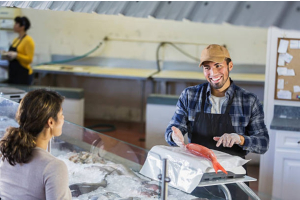
- Retail: Within supermarkets and smaller grocery stores, the implementation of 2D barcodes on products (such as meat) has allowed for the inclusion of much more detailed information, such as expiry dates and batch numbers. This can significantly reduce product recalls, food wastage, and the inadvertent sale of expired goods.
- Healthcare & Pharmaceutical: 2D barcodes have become crucial for pharmaceutical traceability and product authentication. In pharmaceuticals, where space is limited, 2D barcodes are ideal for small containers and canisters or any other vessels where space is limited. 2D barcodes can encode extensive information such as serial numbers, batch details, product descriptions, and even URLs for additional product information, enhancing supply chain efficiency and transparency. 2D barcodes are also extremely beneficial in the healthcare trade, as they can be etched into metal items like stents.
- Consumer Packaged Goods: 2D barcodes are revolutionising the consumer packaged goods industry by providing detailed product information directly to consumers. For instance, they can be used on food packaging to include nutritional facts, ingredients, and allergen information, aiding consumers in making informed purchasing decisions. This transparency not only enhances consumer trust but also supports regulatory compliance and reduces the risk of product recalls.
- Warehousing & Logistics: Many warehouses now benefit from incoming products already that have been labelled with 2D barcodes. This enables immediate scanning and data analysis without reliance on backend or third-party systems, streamlining inventory management.
- Travel & Transportation: Within the travel and transportation sectors, 2D barcodes streamline ticketing and passenger management processes. As an example, airlines use them on boarding passes, allowing passengers to easily check in and board flights using mobile devices. Similarly, they are employed in transportation logistics for tracking and managing cargo, optimising route planning, and ensuring efficient supply chain operations. This enhances overall operational efficiency and customer satisfaction in the travel and transportation industries.
1D or 2D: Which Barcode is Best For Me?
While 2D barcodes may gradually overtake 1D barcodes, there still may be a couple of good scenarios where you may wish to consider 1D. The first is if you are restricted to using traditional laser scanners that can only read 1D barcodes. The second is if your software does not support 2D barcodes. If neither scenario applies to you, then it’s likely more advisable to consider 2D barcodes instead.
Comparatively, 2D barcodes offer a slew of advantages; they are more tolerant of scanning angles, poor lighting conditions, and lower-quality cameras. They are more resilient to damage and provide higher data density, along with automatic error detection and correction. 2D barcodes can also enable machines to locate and scan them automatically, making them ideal for process automation. As such, switching from 1D to 2D barcodes can significantly increase the scan success rate from nearly 0% to 90% or higher in certain scenarios.
Next Generation 2D Barcodes for Printing and Packaging
In Australia and abroad, retail sectors are quickly pivoting to Next Generation 2D barcodes. Retailers and brands are collaborating with printing and packaging firms to ensure seamless adoption of Next Gen 2D barcodes, adhering to the appropriate standards and specifications. Next Gen 2D barcodes integrate features like enhanced data storage, dynamic content updates, and interactive capabilities through smartphone scanning. This evolution empowers retailers to deliver richer consumer experiences.
Conclusion
In short, 1D and 2D barcodes can help you keep in step with the rest of the world by enhancing your inventory management and by helping you track products more effectively throughout the supply chain. You can browse Able Scale’s barcoding and printing products here. You can head over to the Able Scale website to check out our wide range of other products. Got a question? You can get in touch with our support team here.
Have questions about our products and services?
We are here to help. Please fill in our online enquiry form below, and we will respond to you within the next business day.