

 Call us Today


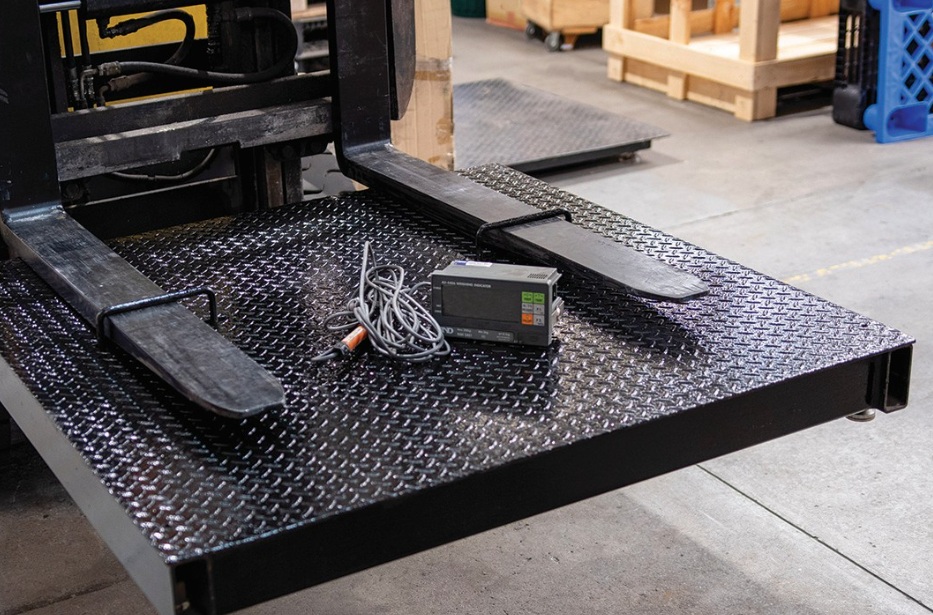
Weighing scale systems, such as pallet scales, freight scales, and parcel scales are a vital component in the logistics and transportation industries. Accurate measurements and reliable data collection allow businesses to track shipments effectively, plan loads efficiently, and make timely adjustments to ensure that deliveries meet deadlines. Without precise weighing systems, businesses risk overloading vehicles, underutilizing capacity, and encountering operational inefficiencies.
Using the wrong scale or an inaccurate weighing system can create a range of challenges for businesses. Inaccurate measurements can lead to costly mistakes, such as overcharging or undercharging clients, miscalculating shipping costs, or incurring fines for overloaded vehicles. Misweighed loads may also cause delays in operations, requiring adjustments, reloading, or offloading, which slows down the entire supply chain and increases labor costs.
Beyond operational inefficiencies, incorrect weighing can result in compliance issues, as shipments that exceed legal weight limits risk fines, penalties, and reputational damage. In addition, poor data from unreliable scales makes it difficult to optimise logistics planning, route management, and load distribution, leading to underutilised resources and reduced overall efficiency. Choosing the right scale saves time, cuts operational costs, and ensures that shipments are delivered safely, on time, and fully compliant with regulations.
What are Freight Scales?
Freight scales are large-capacity weighing systems designed to handle heavy loads, typically ranging from hundreds of kilograms to several tonnes. These scales are essential for accurately weighing bulky or oversized freight before transportation, ensuring compliance with legal weight limits and optimising shipping costs.
Freight scales are commonly used by freight forwarders, ports, large distribution hubs, and logistics companies that handle heavy shipments. The benefits of using freight scales include improved operational efficiency, as accurate weight data allows for better load planning and reduced risk of overloading vehicles. They also help businesses maintain compliance with transport regulations, avoid costly fines, and provide reliable data for billing and inventory management. By integrating freight scales into logistics operations, companies can streamline workflows, reduce errors, and enhance overall supply chain performance
What are Pallet Scales?
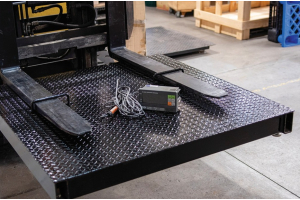
Pallet scales are weighing systems specifically designed to measure the weight of palletised goods, typically within warehouses, distribution centres, and manufacturing facilities. Unlike standard scales, pallet scales can accommodate entire pallets of products, providing accurate measurements without the need to unpack or redistribute items.
The benefits of pallet scales include improved efficiency in warehouse operations, as they allow staff to quickly weigh and verify goods before shipping or storage. They reduce the risk of human error, support compliance with internal and external weight regulations, and help businesses optimise logistics by providing precise data for freight planning and cost reduction. Additionally, pallet scales contribute to safer handling practices by preventing overloading and uneven weight distribution. Overall, pallet scales combine convenience, accuracy, and speed, making them a valuable tool for businesses managing large volumes of palletised goods
What are Parcel Scales?
Parcel scales are precision weighing devices designed for measuring small to medium-sized packages, typically ranging from a few grams up to several kilograms. Such scales are essential for determining accurate shipping weights, calculating postage or courier fees, and ensuring compliance with shipping requirements. Parcel scales are commonly used by courier services, postal companies, e-commerce businesses, and retail operations that handle frequent shipments. They help streamline the shipping process by providing fast, reliable weight measurements, which can be integrated with postage printing systems or shipping software.
The benefits of parcel scales include reducing costly shipping errors, preventing under- or overcharging, and saving time during the packing and dispatch process. They also improve operational efficiency by enabling accurate inventory management and better logistics planning. For businesses that ship large volumes of parcels, parcel scales are a critical tool for maintaining accuracy, speed, and customer satisfaction
Comparison Table
| Feature | Parcel Scales | Pallet Scales | Freight Scales |
| Load Capacity | Small to medium packages, typically a few grams to ~60kg | Palletised goods, typically 150kg to 5,000kg | Heavy freight, often 500kg to 50,000kg+ |
| Speed | Fast, instant readings for frequent shipments | Moderate, designed for quick pallet weighing in warehouses | Moderate to slow, depends on heavy load handling and automated systems |
| Precision | High precision (grams to 1–5g) | Medium to high precision (0.5kg to 1kg depending on capacity) | Moderate precision, accuracy important for regulatory compliance but less critical for small fractions |
| Platform Size | Small, compact | Medium to large (typically 1.2m x 1.2m or larger) | Large, oversized platforms for trucks, containers, or multiple pallets |
| Best Use Cases | Courier services, postal companies, e-commerce businesses | Warehouses, distribution centres, manufacturing facilities | Freight forwarders, ports, large distribution hubs, logistics companies |
| Key Benefits | Accurate shipping costs, faster dispatch, reduces shipping errors | Efficient pallet handling, regulatory compliance, reduces manual errors | Handles heavy loads safely, ensures compliance, optimises freight costs and planning |
| Approved for Trade | Not usually | Optional | Optional |
How Each Scale Enhances Efficiency in Logistics Industries
Different types of weighing scales play a crucial role in streamlining logistics operations, helping businesses save time, reduce costs, and maintain accuracy across the supply chain. Here’s how each scale holds up when it comes to the big issues…
Accurate Weight Measurement:
Parcel Scales can provide precise readings for small packages, ensuring every shipment is correctly weighed down to grams, which is essential for accurate postage and shipping labels.
Pallet Scales can accurately weigh entire pallets, allowing warehouse staff to confirm that loads match recorded inventory and avoid discrepancies in bulk shipments.
Freight Scales can measure heavy freight loads with sufficient precision to comply with transport regulations and maintain data accuracy for large-scale logistics operations.
Cutting Shipping Costs:
Parcel Scales prevent overpaying for postage or courier fees by ensuring packages are billed correctly, reducing wasted shipping expenses.
Pallet Scales allow operators to optimise load distribution on pallets, preventing overloading and enabling more cost-efficient freight planning.
Freight Scales help logistics companies avoid fines and surcharges from overweight shipments, while maximising payload efficiency for trucks or containers.
Boost Inventory Confidence:
Parcel Scales ensure small items are correctly weighed and tracked, supporting accurate stock levels in e-commerce and postal operations.
Pallet Scales provide reliable measurements for palletised goods, improving inventory records and reducing errors in warehouse management systems.
Freight Scales enable precise weight verification for bulk shipments, helping companies maintain confidence in large-scale inventory and supply chain reporting.
Improve Safety & Compliance:
Parcel Scales reduce the risk of overloaded boxes that could cause injury to staff or damage to equipment.
Pallet Scales ensure pallets are within safe weight limits, lowering the risk of accidents during lifting, stacking, or transport.
Freight Scales guarantee compliance with national and international weight regulations, preventing fines, legal issues, and unsafe transportation practices.
Save Time & Labour:
Parcel Scales enable rapid weighing of individual packages, reducing the time spent on manual checks and improving throughput.
Pallet Scales streamline warehouse operations by weighing entire pallets at once, cutting down the need for repetitive manual handling.
Freight Scales facilitate fast measurement of trucks or container loads, speeding up loading, dispatch, and documentation processes.
Improve Customer Satisfaction:
Parcel Scales ensure customers are charged accurately and parcels are shipped reliably, reducing complaints and returns.
Pallet Scales help guarantee that orders are fulfilled correctly and delivered on time, boosting reliability for B2B or wholesale clients.
Freight Scales help maintain trust with partners and customers by ensuring shipments are safe, compliant, and delivered as expected.
Choosing the Right Scale for your Business
When choosing the right scale for your business, it’s important to consider factors such as shipment size, volume, accuracy requirements, and how well the scale integrates with your warehouse management or logistics systems. Selecting a scale that matches your operational needs not only ensures precise measurements but also delivers efficiency gains, reduces labour, cuts shipping and handling costs, and minimises errors. The right choice supports smoother workflows, faster processing, and more reliable inventory and shipping data, ultimately contributing to both cost savings and improved customer satisfaction.
Scale the Heights: The Best Scales for Freight & Shipping Are From Able Scales
Painted Steel Pallet Scales - Nuweigh IH1949P
The Nuweigh IH1949P pallet scale is a versatile solution designed for a wide range of industries, making it ideal for weighing large items, freight, and shipping loads. Built for durability and convenience, the scale features a steel construction with a powder-coated finish and includes a rechargeable, battery-operated JAC101 indicator. Trade-approved for all commercial weighing requirements, the IH1949P delivers accuracy and reliability at an affordable price. Key features include a 1200mm x 1200mm cheka plate platform, four 1500kg load cells, dual-range weighing (1500kg x 500g / 3000kg x 1kg), and optional accessories such as an indicator stand, protection frame, and 1200mm x 1000mm ramp/s.

Pallet Scale - OHAUS VE3000RA
The OHAUS VE3000RA pallet scale is a robust and reliable weighing solution designed for industrial and commercial applications. Built from painted mild steel with structural bracing, the scale minimizes distortion under heavy loads, while a raised cross-hatch platform surface provides slip resistance for safe operation. The VE Series supports high-accuracy performance through four OIML R60-approved load cells and adjustable, ball-in-cup swivel feet. A side-access IP65 dust- and water-protected junction box with a 5m cable simplifies installation, while the OHAUS T31P indicator offers a backlit LCD display, multiple weighing units, rechargeable battery operation, and piece counting functionality. With optional ramps and mounting accessories, the VE Series combines quality, value, and dependable performance for everyday weighing needs.

Nuweigh Galvanised or Stainless Steel Pallet Scales (IH1949 Series)
The Nuweigh Galvanised or Stainless Steel Pallet Scales - IH1949 is a fully galvanised, trade-approved solution designed for rugged industrial environments. Built to withstand demanding industrial conditions, the IH1949 delivers reliable, accurate weighing and versatile functionality for a wide range of applications. It features a heavy-duty cheka plate platform with a standard size of 1200mm x 1200mm, a stainless steel summation junction box, and 5 metres of conduit-protected cable to the weighing indicator.The scale can be paired with the JAC101 electronic battery-operated indicator, offering a large 26mm backlit LCD display, tare and zero functions, M+ memory addition, and dual power options via 240V or rechargeable battery.

Electronic Parcel Scales - Nuweigh CHR386
The electronic parcel scales - Nuweigh CHR386 is designed for light-duty parcel and freight applications, offering both convenience and accuracy. It features a low-profile stainless steel platform measuring 310mm x 300mm with a 28mm height, supported by a four-load-cell design for precise measurements. The scale includes a large 26mm backlit LCD display and dual-range weighing for enhanced accuracy. A wall-mount bracket for the indicator, flexible cord, and power options via a 9V adaptor or 4 AA batteries add to its versatility. Available capacities include 60/150kg x 20/50g and 150/300kg x 50/100g, and it comes with a 1-year manufacturer’s warranty, making it a reliable choice for everyday parcel and freight weighing tasks.

Conclusion
Precise weighing is a critical component of modern logistics, supporting both operational efficiency and customer satisfaction. Investing in the correct weighing technology offers significant benefits for logistics and transportation businesses; accurate scales help maintain compliance with national weight and safety regulations, reduce costly errors, and minimise operational risks. They also streamline workflows, improve supply chain efficiency, and provide reliable data for informed decision-making, allowing businesses to optimise delivery routes, load management, and cost planning. In the fast-paced logistics sector, accurate and dependable weighing systems are more than just tools; they are a strategic advantage. You can explore pallet scales here, or head to our homepage to browse our full range of products and services. Got a question? You can contact us directly here.
Have questions about our products and services?
We are here to help. Please fill in our online enquiry form below, and we will respond to you within the next business day.