

 Call us Today


What is a Moisture Analyser & How Do They Work?
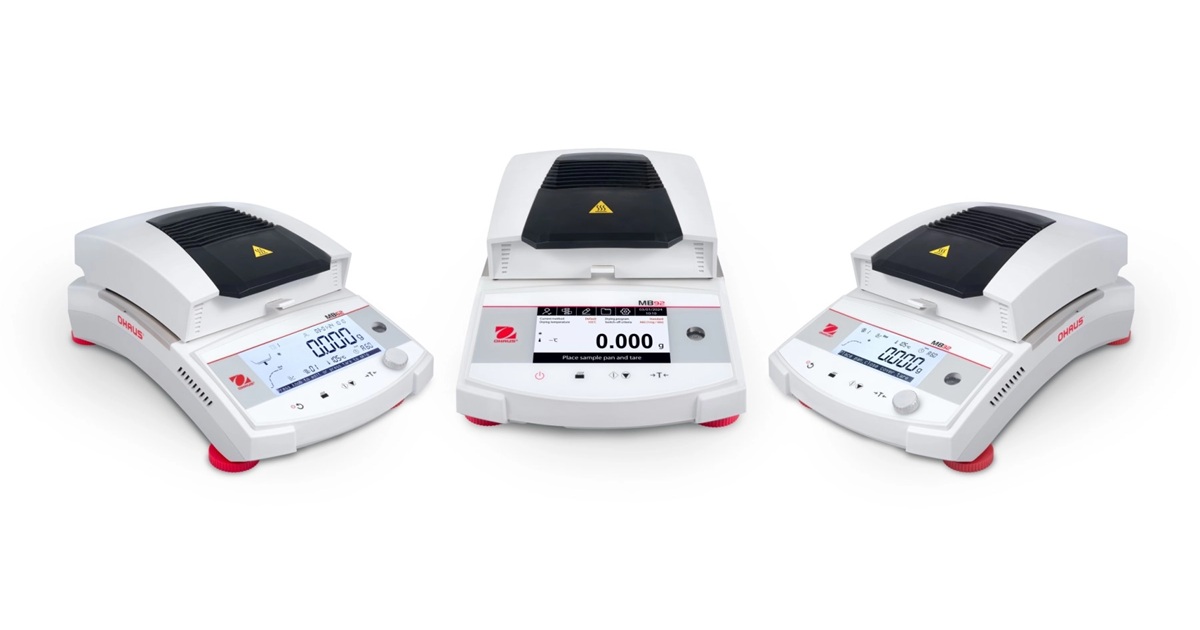
The humble moisture analyser, also known as a moisture balance, is an invaluable instrument designed to weigh and determine the moisture content of solid materials. Precise control of trace moisture in solids is critical in industries such as food processing, plastics manufacturing, pharmaceuticals, and heat treatment processes.
Traditional laboratory methods for moisture determination are often slow and labour-intensive, with testing times extending to several hours. Modern automated moisture analysers significantly reduce testing time, delivering reliable results in just a few minutes while improving consistency and efficiency.
Moisture analysers are widely used across multiple industries, particularly in food production and quality control. Excess moisture in food products can lead to spoilage, staleness, or bacterial growth, while insufficient moisture may negatively affect texture, flavour, calorific value, and shelf appearance. As many food products are sold by weight, accurate moisture measurement also ensures consumers are not paying for excess water content.
Beyond food applications, moisture analysis plays a vital role in quality control and laboratory environments. It is commonly used to measure water content in crude oil, fuels, sewage sludge, and a broad range of chemical substances, solids, and liquids.
Most modern moisture analysers also feature integrated computer interfaces that allow operators to monitor the drying process and analyse its impact on samples in real time. They also offer data storage capabilities, enabling frequently used test parameters to be saved and reused, reducing setup time and minimising operational downtime.
The Importance of Moisture Measurement?
In sectors such as food processing, pharmaceuticals, and chemical manufacturing, accurate knowledge of moisture content is essential to maintaining product quality, performance, and consistency. From baking applications to tablet formulation and polymer production, precise moisture measurement is a critical control factor. Historically, moisture determination has relied on techniques such as oven drying and Karl Fischer titration (the extremely specific but very accurate chemical analysis method for determining trace amounts of water). Increasingly, however, modern moisture analysers are becoming the preferred solution.
This article explains how moisture analysers compare with traditional methods and why they represent a significant advancement in moisture measurement. It also examines how these systems help organisations reduce testing time and operating costs while delivering faster, more consistent, and highly reliable results.
Key Features to Look For in a Moisture Analyser
- Accuracy & Readability: Accuracy and readability are critical performance indicators for moisture balances, as even small measurement errors can significantly affect moisture results. Many modern moisture analysers offer readability down to 0.001 g (1 mg), enabling precise detection of minor weight changes during the drying process. Higher readability improves repeatability, particularly for low-moisture or high-value samples, and supports consistent quality control across batches. Accuracy is also influenced by load cell quality, temperature stability, and internal calibration systems.
- Heating Technology: The heating method directly affects the speed and efficiency of moisture evaporation. Selection of the heating element influences drying time, energy consumption, and suitability for different sample types. Common heating technologies include:
- Halogen heating: Provides fast, uniform heating and is widely used for rapid moisture analysis.
- Infrared heating: Offers gentler heating suitable for delicate samples, though with slower drying times.
- Ceramic heating: A lower-cost option, but generally slower and less uniform than halogen heating. - Temperature Range: Moisture analysers dry samples using controlled heat, and the temperature range defines the minimum and maximum heating limits the instrument can achieve—typically between 40°C and 200°C. Different materials require specific drying temperatures depending on their composition and sensitivity to heat.
- Sample Size: Sample size capacity determines the range and type of materials a moisture balance can accommodate. Typical sample capacities range from a few grams up to 50–200 g, depending on the model. Larger sample sizes can improve representativeness for heterogeneous materials, while smaller samples allow faster drying and reduced testing time. Selecting the appropriate capacity is essential to balance accuracy, throughput, and practical workflow requirements.
- Testing Modes: Modern moisture balances offer multiple testing and shutdown modes to suit different sample characteristics and application needs. Common modes include automatic endpoint detection, timed drying, and manual stop functions. Some instruments also support stepped or ramped temperature profiles for heat-sensitive materials. These flexible testing modes allow users to optimize drying behaviour, improve repeatability, and tailor methods to specific products or regulatory standards.
- Data Logging & Connectivity: Data management has become a core function of modern analytical instruments, including moisture analysers, in both laboratory and industrial settings. Advanced moisture analysers incorporate data logging capabilities that automatically record test results, time stamps, method parameters, and operator information. This ensures full traceability and simplifies auditing and reporting processes. Connectivity options such as USB, Ethernet, and wireless interfaces enable seamless data transfer to laboratory information management systems (LIMS), quality management systems, or external storage devices. Integration with networked systems reduces manual data entry, minimises transcription errors, and supports centralised data analysis across multiple instruments or sites.
- Compliance Requirements: In regulated industries such as food, pharmaceuticals, and chemicals, moisture balances must support compliance with relevant standards and quality systems. Many instruments are designed to align with GLP/GMP, ISO, and HACCP requirements by providing traceable results, audit-ready data records, and controlled user access. Features such as electronic data storage, method locking, and user identification help support internal quality audits and external regulatory inspections.
- Durability: Moisture balances used in laboratory and industrial environments must be built for long-term reliability. Robust housings, high-quality heating elements, and chemically resistant sample pans contribute to durability and consistent performance over time. Protection against dust, heat stress, and frequent opening of the drying chamber is particularly important in production or quality control settings where instruments are used continuously.
- Brand Reliability: Brand reputation is a strong indicator of long-term performance, service support, and measurement confidence. Established manufacturers such as A&D Weighing & OHAUS are widely recognised for their precision engineering, consistent measurement technology, and compliance-focused design. These manufacturers typically offer validated specifications, long product life cycles, local service support, and calibration traceability, making them a preferred choice in professional laboratory and industrial applications.
Moisture Analyser vs Moisture Meters
| Feature | Moisture Analyser | Moisture Meter |
| Measurement Principle | Direct measurement using loss-on-drying (weight loss during controlled heating) to calculate moisture content. | Indirect measurement based on electrical properties (conductance/ dielectric constant) or similar sensors. |
| Accuracy & Precision | High accuracy suited for quantitative results; can measure small changes with precision. | Moderate accuracy with relative or approximate moisture levels; influenced by material type and condition. |
| Typical Use Cases | Laboratory QC, R&D, production release decisions. | Field checks, building inspection, agriculture, quick on-site assessments. |
| Sample Treatment | Destructive (sample is heated and loses moisture). | Non-destructive (no sample change required). |
| Portability | Benchtop or fixed units, usually mains-powered. | Typically handheld and portable; battery or low-power operation. |
| Output Type | Quantitative moisture content (% by weight). | Qualitative or relative moisture indication (varies by technology). |
Tips for Accurate Moisture Testing
- Correct Sample Prep: Proper sample preparation is essential to ensure accurate and repeatable moisture results. Samples should be representative of the bulk material and free from contamination or surface moisture introduced during handling. Inconsistent preparation can lead to uneven drying and unreliable measurements.
- Uniform Sample Grinding: Where applicable, samples should be ground to a consistent particle size to promote even heat distribution and moisture evaporation. Non-uniform samples may dry at different rates, reducing result accuracy. Grinding should be performed carefully to avoid heat buildup that could alter moisture content.
- Using Appropriate Sample Size: Selecting the correct sample weight is essential for reliable measurements. Samples that are too large may dry unevenly, while samples that are too small may not accurately represent the material. Always follow the analyser manufacturer’s recommended sample size range.
- Avoiding Drafts: Moisture analysers are sensitive to air movement, which can affect weighing stability. Testing should be conducted in a draft-free environment, away from air conditioning vents, fans, or open doors, to ensure consistent and precise readings.
- Regular Calibration: Routine calibration helps maintain both weighing and temperature accuracy over time. Using certified calibration weights and following a scheduled calibration routine supports measurement traceability and long-term reliability, particularly in quality-controlled or regulated environments.
The Best Moisture Analysers to Buy in Australia
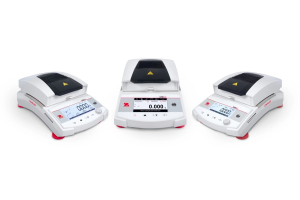
- Professional Moisture Analyzers - Ohaus MB62: The OHAUS MB62 Moisture Analyzer is a next-generation moisture analyser designed to support a wide range of moisture determination applications. It offers enhanced precision and efficiency, providing confidence in the accuracy and repeatability of results. The instrument supports up to 20 stored test methods and retains up to 100 results, enabling effective statistical analysis and consistent testing workflows. Key features include a carbon fibre heating element for efficient drying, a tool-free design for easy cleaning, and a large 5-inch LCD display with a secondary line for clear result visibility. Connectivity is supported via USB and RS232 interfaces, while a simple rotary knob control ensures intuitive operation. The MB62 also supports multiple measurement modes, including percent moisture, percent moisture regain, percent solids, and standard weighing.
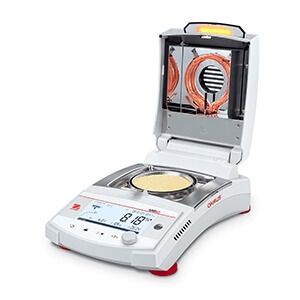
- Entry Level Moisture Analyzer - Ohaus MB32: The entry level OHAUS MB32 moisture analyzer features advanced carbon fibre heating technology and an upgraded load cell, delivering fast, consistent, and accurate results for a variety of applications. It offers quick drying times compared with traditional ovens, and its intuitive rotary knob simplifies navigation and operation. The compact design allows it to fit easily into any workspace, while the tool-free, easy-to-clean construction ensures convenient maintenance. Additional features include a carbon fibre heat source, a 4-inch backlit LCD display with a secondary line for clear readings, five automatic shut-off criteria, two selectable drying profiles, and storage for up to two test methods.
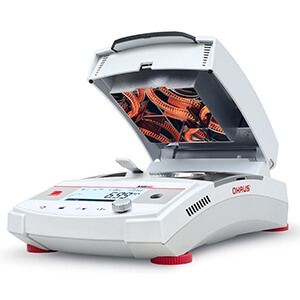
- High Performance Moisture Analyzer - Ohaus MB92: The high performance moisture analyzer - OHAUS MB92 is a next-generation moisture analyser equipped with a carbon fibre heat source, designed for advanced moisture measurement applications. It delivers high precision and efficiency, providing reliable and repeatable results. The instrument supports up to 100 test methods and stores up to 1,000 results, enabling comprehensive statistical analysis. Key features include a tool-free, easy-to-clean design, a 4.3-inch capacitive colour touchscreen with intuitive icon-based navigation, and connectivity via USB and RS232. The MB92 offers simple operation, four selectable drying profiles (standard, fast, ramp, and step), storage for up to 20 methods and 200 results, and a flexible heating range of 40–200 °C.

How to Choose the Right Moisture Analyser
Choosing the right moisture analyzer starts with understanding the type of sample you need to test, as different materials may require specific temperature settings or drying methods. The heating technology—whether halogen, infrared, or carbon fibre—should be considered for its impact on drying speed, efficiency, and suitability for sensitive samples. It is important to ensure the analyser allows for regular calibration and maintenance to maintain long-term accuracy. Assess your sample size and throughput needs to ensure the instrument can handle your workflow efficiently. Budget considerations are also key, as features, precision, and capacity can influence cost. Finally, confirm that the analyser complies with relevant regulatory standards and quality requirements for your industry.
Conclusion
Investing in a high-quality moisture analyser ensures accurate, consistent results, reduces testing time, minimises errors, and supports long-term operational efficiency, making it a critical tool for maintaining product quality and regulatory compliance. You can browse the Able Scale range of Moisture Balances here, or head over to our home page to explore our many other products and services. For all inquiries, contact us directly.
Have questions about our products and services?
We are here to help. Please fill in our online enquiry form below, and we will respond to you within the next business day.