

 Call us Today


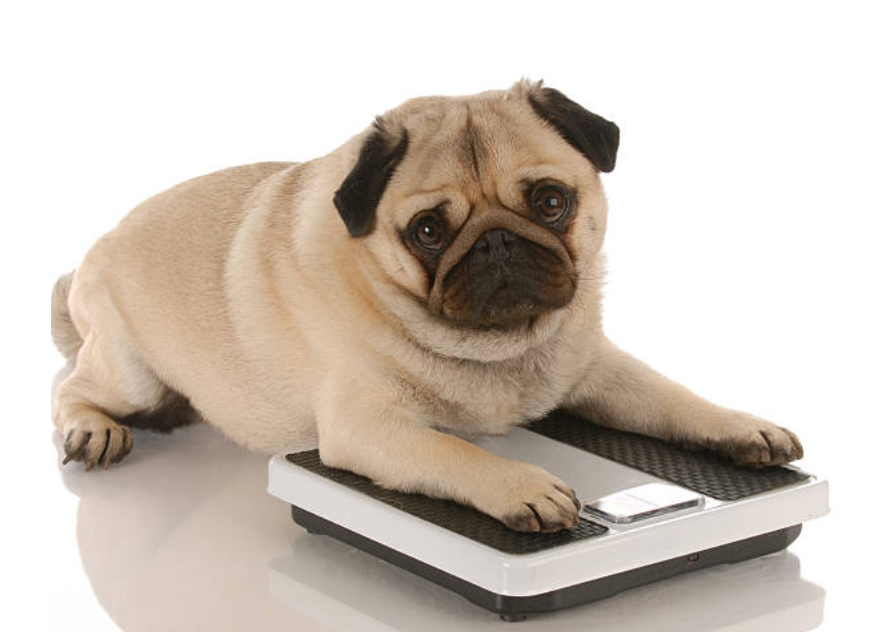
Animal scales — also known as veterinary scales — are essential tools used to weigh a wide variety of animals, from large livestock to small pets, in settings such as farms, zoos, and veterinary clinics. A key feature to look for in a high-quality animal scale is the dynamic weighing function, also known as the hold function. Since animals rarely stay still during a weighing session, this feature compensates for movement by calculating and displaying a stable average weight, effectively "freezing" the result on the screen. For this very reason, dynamic weighing is often referred to as animal weighing.
Accurately tracking weight is crucial, as it serves as a vital indicator of an animal’s overall health. In most veterinary environments, the most frequently weighed animals are cats and dogs, along with smaller species like rabbits, guinea pigs, reptiles, and other small companions.. Whether a pet is underweight or overweight, both conditions can lead to significant health issues or reduced quality of life.
Routine weight checks during vet visits allow professionals to monitor a pet’s condition over time and identify any concerning trends early on. They also provide an opportunity to educate pet owners about healthy weight ranges based on the animal’s age and stage of development—juvenile, adult, or senior. If a pet’s weight falls outside of recommended parameters, veterinarians can investigate the underlying cause and provide tailored advice to help guide the pet back to a healthier condition. You can browse our Nuweigh animal scales here, or scroll down to learn more.
Why Accurate Animal Weighing Matters in the Veterinary Fields
Weighing your pet accurately is a vital part of veterinary care because it influences many key aspects of their health management. Precise weight measurements ensure that your pet receives the right care and treatment. Here are some important reasons why accurate weighing matters:
- Determining Correct Dosages: Scales are useful for gauging the correct dosage of medications, particularly for small animals and exotic pets where even slight errors can cause serious issues.
- Monitoring Growth & Nutrition: Scales are instrumental in monitoring growth and nutritional status to support healthy development and maintain ideal body condition.
- Tracking Disease Progression & Treatment Outcomes: Scales are valuable tools when tracking the progression of diseases and evaluating how well treatments are working over time.
- Safe Anaesthesia Administration: Ensuring safe administration of anaesthesia by calculating proper dosages to avoid risks associated with under or overdosing
Regular, accurate weighing provides essential information that helps veterinarians deliver safe and effective care tailored to your pet’s specific needs.
The Challenges Vets Face When Weighing Animals
When it comes to weighing a live animal, it’s not uncommon for a vet to face a litany of difficulties; most common among them being...
- Anxious Animals: Weighing large animals poses unique challenges, particularly in managing their stress and behavior. Animals like livestock or zoo species often find weighing unfamiliar and stressful, which can compromise both their welfare and the accuracy of the measurements. Stressed animals may act unpredictably, risking injury to themselves and handlers, so minimizing stress is critical. A key factor is acclimatising animals to the weighing process. Since they are often unfamiliar with the equipment and environment, gradual introduction and training can help reduce fear and anxiety. Handlers trained in animal behaviour use calm, consistent techniques and positive reinforcement—like treats—to encourage cooperation.
The design and placement of weighing equipment also play a major role in stress reduction. Equipment that aligns with animals’ natural movements, operates quietly, and avoids tight spaces or sharp edges is less intimidating and helps keep animals calm. - Large/Small/Exotic Animals: Whether you’re weighing large livestock, or smaller, exotic species, weighing an animal presents a distinct set of challenges that go beyond simply placing them on a scale. Accurate weight measurement is essential for maintaining animal health, supporting effective treatment plans, managing nutrition, and ensuring precise dosing of medications. It also plays a critical role in agricultural productivity, veterinary diagnostics, and wildlife care. Large animals such as cattle, horses, and other livestock require specialised weighing systems due to their size, strength, and sometimes unpredictable behaviour. Standard veterinary scales are often insufficient for these animals, as the equipment must be built to support their considerable mass and accommodate their physical dimensions.
Additionally, the scales may need to be portable, particularly for animals in paddocks, rural properties, or remote facilities where transport is difficult or stressful. On the other end of the spectrum, weighing small animals and exotic pets — such as birds, reptiles, and rodents — also presents challenges. Their small size means that even slight movements can interfere with accurate readings. These animals often require scales with highly sensitive load cells and a dynamic or hold function that can calculate average weight despite motion. Ultimately, effective weighing of both large and small animals demands the right combination of specialised equipment, careful handling, and an understanding of species-specific behaviours to ensure reliable data and support optimal care. - Ensuring Repeatable Accuracy Over Several Visits: In veterinary and animal care settings, consistent and repeatable weight measurements across multiple visits are essential for monitoring an animal’s health over time. Small discrepancies between visits can lead to inaccurate assessments or inappropriate interventions. Achieving a level of consistency starts with using a high-quality, properly calibrated animal scale. Even minor errors in calibration can accumulate over time, which is why regular maintenance and calibration checks are essential. Veterinary-grade scales with a dynamic or hold function are particularly useful, as they account for animal movement and display a stable, averaged weight—helping reduce variation caused by fidgeting or shifting.
To ensure accurate comparisons over time, the same scale should be used for each visit whenever possible. Different scales may have slight variations in calibration or sensitivity, which can lead to inconsistent results. Additionally, weigh the animal under similar conditions each time — for example, before feeding, after toileting, and with minimal external stressors — so that changes in weight are more likely to reflect true physiological differences rather than situational factors. By standardising your weighing practices and using the right equipment, you ensure reliable data over time. This leads to more informed clinical decisions, more effective treatment plans, and significantly improved long-term care. - Clinic Space Limitations: Weighing animals presents several logistical and technical challenges, with one of the most prominent being the limitations of standard scale size and weight capacity. Animals such as horses, cattle, and other large species require purpose-built weighing equipment that can safely and accurately support their body mass and accommodate their dimensions. The platform must be spacious enough for the animal to stand securely without risk of slipping, injury, or escape. If the surface is too small or unstable, it can result in inaccurate readings and increase stress or injury risk — both to the animal and the handlers, who may face unpredictable behavior from a frightened or uncomfortable animal.
Equally important is the weight capacity of the scale. Larger animals can weigh hundreds or even thousands of kilograms, and using a scale with insufficient load capacity can lead to equipment failure or incorrect measurements. This is particularly concerning in veterinary and agricultural settings, where accurate weight data is essential for determining correct medication dosages, monitoring growth, and managing nutrition.
The Different Types of Veterinary Weighing Equipment
Veterinary weighing scales come in a range of different shapes, sizes and models, including;
- Platform Scales: Flat, low-profile scales that are ideal for weighing dogs and cats in a clinical setting.
- Hanging or Sling Scales: Used for safely weighing small and/or exotic animals, using a secure harness or sling.
- Portable Scales: Lightweight and compact, perfect for mobile veterinarians or on-site weighing.
- Large Animal Scales: Heavy-duty scales designed to handle the size and weight of livestock and horses.
The Key Features to Look For in a Veterinary Scale
When purchasing your animal scales, make sure your factor in the following important considerations…
- Accuracy & Precision: This is essential for correct diagnosis and treatment, especially when weighing small animals where slight differences can affect medication dosages and health decisions.
- Weight Capacity: Always ensure that the scale can comfortably handle the expected weight range of your patients to prevent equipment strain and ensure animal safety.
- Safety Features: Look for non-slip & animal friendly surfaces, low-profile platforms, or side barriers that can help nervous animals stay secure during weighing, thereby protecting both the animal and handler.
- Easy-to-Clean Design: Choose scales that are made with smooth, non-porous, and corrosion-resistant materials to maintain hygiene and reduce the risk of disease transmission.
- Stabilisation Technology: Motion compensation features help the scales automatically adjust for animal movement during weighing, thus providing fast, accurate, and reliable measurements even with restless or unsteady animals, improving efficiency and data precision.
- Portability: For mobile vets or practices with changing setups, look for lightweight models with handles or wheels for easy transport.
- Readability: A large, backlit screen ensures readings can be seen clearly under various lighting conditions, helping prevent recording errors.
Tips for Accurate & Stress-Free Weighing
- Regularly Calibrate the Scale: It’s important to regularly calibrate the scale to maintain accuracy over time, as even small deviations can lead to incorrect weight readings affecting animal care.
- Use Treats or Comfort Objects to Relax Anxious Animals: A quick snack or a friendly teddy can help reduce an animal’s stress and movement, resulting in quicker, more precise weighing.
- Be Prepared to Weigh Animals of Different Sizes: Larger animals need stable platforms, while smaller or delicate ones may require sling or container weighing for safety and accuracy.
- Don’t Forget to Tare: Zeroing or taring a scale when using containers or slings ensures that only the animal’s weight is measured, preventing errors from the added weight of the holding device.
Product Recommendations
Low Profile Animal Scale - Nuweigh CHR392
This low-profile platform scale is designed for easy loading and unloading, making it ideal for animal weighing and other applications where minimal platform height is essential. It features a 26mm LCD display and operates using either a 9V power adaptor or 4 AA batteries for added flexibility. The stainless steel platform is fitted with a non-slip, removable rubber mat for improved safety and hygiene. An animal weighing mode ensures accurate readings despite movement, while the four load cell design enhances precision. The scale also comes with a wall-mount bracket for convenient display positioning. Measuring 900mm x 550mm with a platform height of just 70mm, it has a weighing capacity of 250 kg with 100g increments.
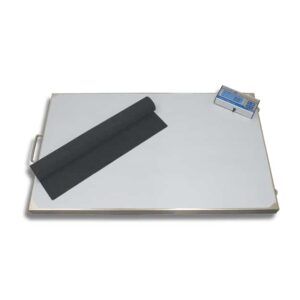
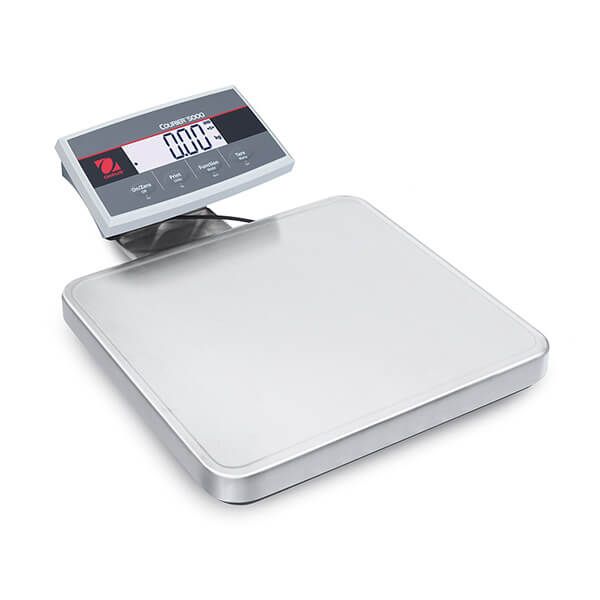
Shipping and Animal Weigh Scale - Courier 5000
The Courier 5000 is a versatile general shipping scale that also performs exceptionally well for animal weighing, thanks to its dynamic weighing feature. This function captures and holds the weight on the display, ensuring accurate readings even when the subject is in motion. It features a clear 28mm LCD display with a white backlight and can be powered via the included AC adaptor with USB Type-C cable or with 3 AA batteries (not included). The scale includes a durable stainless steel platform and rubber feet for stability. Additional options such as a column kit, rubber mat, and a coiled 9m extension cable enhance its adaptability. Available in various sizes and capacities, the Courier 5000 offers flexibility for a range of weighing needs.
Conclusion
Accurate weight measurements are essential in all fields of veterinary practice; they form the basis for safe medication dosing, effective treatment planning, and ongoing health monitoring. Whether you’re working with small pets or large animals, precision in weighing supports better outcomes, enhances animal welfare, and ensures veterinarians can make informed, confident decisions. You can check out our animal scales here. For all inquiries, feel free to contact us directly.
Have questions about our products and services?
We are here to help. Please fill in our online enquiry form below, and we will respond to you within the next business day.