 Call us Today

Retail Weighing Scales
Shopping by
-
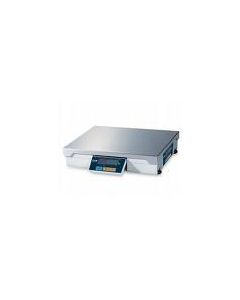 Weight Only POS Scale - CAS PD-IIPOS interface scale for connection to ECR's and POS systems.
 -
-
-


We offer a diverse range of retail scales to meet any business' requirements. Our weighing equipment can be used in any grocery store, deli, bakery or meat counter and be used by staff or customers. We offer a number of retail options including price computing and weighing scales plus scales which connect to cash registers or POS systems. We also have hanging weighing equipment for groceries, and two in one scale/scanners.
Our digital and analogue retail scales are manufactured from the world's leading weighing manufacturers, are fully programmable, simple to use and easy to clean. Our reputable weighing equipment is available for outright purchase or short and long term hire.
Bench scales are versatile weighing devices commonly used in industrial and commercial settings. They are designed to sit on a table or counter, providing a stable platform for weighing items. Bench scales are known for their durability and accuracy, making them ideal for tasks ranging from simple weighing to more complex counting and check-weighing applications. They are often used in manufacturing, shipping, and retail environments where precise measurements are essential.
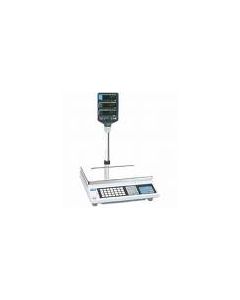
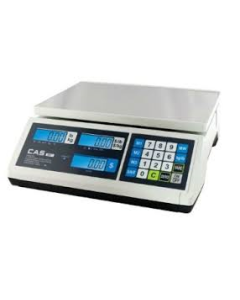
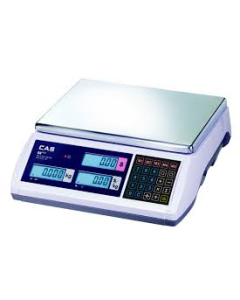
Price computing scales are specialised weighing devices designed to calculate the price of an item based on its weight. These scales feature digital displays that show the unit price, weight, and total price, marking them as essential tools for retail environments, such as grocery stores and markets. They help streamline the checkout process by automatically calculating the cost, ensuring accurate transactions and reducing the potential for human error.
Weight only point-of-sale (POS) scales are used to measure the weight of products at the checkout counter without calculating the price. These scales are integrated with POS systems to ensure accurate weight readings, which can then be used by the POS system to calculate the price based on pre-set unit prices. These scales are commonly found in retail environments where products are sold by weight, such as delis, bakeries, and bulk food stores.
Hanging scales are used to weigh items that are suspended from the scale rather than placed on a platform. These scales are typically used in environments where large or bulky items need to be weighed, such as in warehouses, shipping docks, and agricultural settings. Hanging scales are valued for their portability and ability to handle heavy loads, making them ideal for weighing produce, livestock, and industrial materials.
Postal scales are specifically designed for weighing mail and packages to determine shipping costs. These scales are essential tools for post offices, shipping centres, and businesses that frequently send out parcels. Postal scales provide accurate weight measurements to ensure that the correct postage is applied, helping to avoid overpaying for shipping or having packages returned due to insufficient postage. They often feature digital displays and connectivity options for integration with shipping software.
NMI (which stands for the National Measurement Institute) is an independent organisation that's responsible for ensuring the accuracy and reliability of measuring instruments that are used in trade. NMI Trade Verifiable Scales are weighing scales that have been tested and approved by the NMI to meet trade use requirements. These scales are utilised across various industries, from retail to agriculture, to guarantee that products are sold by weight accurately and fairly.
NMI trade-approved scales are crucial for retailers because they ensure legal compliance, preventing potential fines and legal issues. These scales guarantee accurate measurements, ensuring that customers receive the correct amount of product for the price they pay, which builds trust and maintains fairness in transactions. NMI-approved scales also provide assurance to customers that they are being charged accurately, enhancing the retailer's reputation and encouraging repeat business. Additionally, with NMI certification, retailers have a reliable defence against customer complaints regarding weight and pricing disputes, as the certification proves the scales' accuracy.
A PLU, or product look-up number, functions as a database of codes linked to items in your inventory. While some of these codes adhere to industry standards, such as the grocery store allocations for certain produce, you can also customise your own codes and pricing. Utilising a simple 4-5 digit code to retrieve product information streamlines the sales process, offering greater efficiency compared to manual entry for each transaction. By embracing a retail scale with PLU functionality, you can ensure an organised inventory management with easy access to product details. PLU functionality is particularly beneficial during busy periods when swift customer service is essential.
Some retail scales come equipped with user-friendly, colour-coded keyboards that feature shortcuts for common functions. This function effortlessly streamlines the process of editing information and updating product details, thereby enhancing productivity. A clear, colour-coded keyboard is particularly advantageous for novice users, as it simplifies navigation and minimises errors.
It's ideal for both the retailer and the customer to see the price of the products as they are being rung up. Besides the basic obvious convenience, allowing customers to see their products being weighed fosters trust in the transaction, promoting transparency in pricing. This transparency assures customers that there are no hidden fees or discrepancies. When customers can clearly observe the digital read-out of their purchases, it reduces price discrepancies and enhances the efficiency of the retail process. This honest business practice strengthens customer relations and fosters loyalty.
Certain retail scales come with the convenience of printer connectivity so that retailers can create their own labels and barcodes. Certain models are even capable of their own printing. An ability to autonomously generate clear labels helps you keep your inventory up to date, without having to rely on printing shops.
With portable retail scales, you can effortlessly take your business anywhere. Due to their compact size, retail scales are highly portable and can often operate on battery power. This mobility proves invaluable for retailers who need to take their business on the go, whether it's setting up a stall at a farmer's market, attending an expo, or operating a food truck.
There are many benefits that a set of retail weighing scales can provide your business, including:
Whether you're weighing meats, berries or beads, accuracy is paramount. That's where an automated weighing system comes in handy. It minimises the margin for human error, guaranteeing your customers are charged correctly for their purchases. It also helps maintain balanced stock and sales records, reducing the risk of discrepancies.
This feature enables businesses to generate accurate records of inventory and sales, enhancing both accuracy and efficiency. It is especially useful during stocktaking, providing clear and precise information on every item sold.
Not do retail scales improve workflow and customer satisfaction, but they're also incredibly also easy to use. This user-friendly interface has made retail scales ubiquitous across a wide variety of industries, as staff of all ages and backgrounds can quickly and easily learn to navigate their simple systems.
A significant advantage of retail scales is how much time they can save you. Equipped with features such as immediate labelling systems and compatibility with POS systems, these scales automate tasks that would otherwise require manual input. As soon as items are weighed, the scale generates a barcoded label, allowing customers to quickly proceed to checkout. This automation reduces the need for staff to remember unit prices or manually enter product information, enhancing efficiency and mitigating errors.
At Able Scales, we prioritise choice, quality, and expertise. Our goal is to provide our loyal customers with tailored solutions that perfectly fit their business needs. With a wide array of product brands in stock, we ensure ample choices and maintain competitive pricing. We boast a team with a collective experience exceeding 100 years in sales, servicing, and rental of scales and cash registers. You can browse our wide range of products here, or get in touch with us here.
If you are selling products by weight, then yes, you do need a trade approved scale to ensure accuracy and compliance with legal standards. Trade approved scales are tested and certified to meet regulatory requirements, providing confidence to both you and your customers that the weight measurements are accurate and fair.
You should weigh any product sold by weight on a trade approved scale. This includes items such as fruits, vegetables, meats, fish, and bulk goods. Using trade approved scales for these products ensures that customers are charged correctly and helps maintain trust in your business.
When choosing a retail scale, consider its accuracy, capacity, ease of use, and compatibility with your point of sale (POS) system. Durability and suitability for your specific environment are also important, whether you operate a market stall, grocery store, or deli. Additional features like price look-ups (PLUs) and built-in printers can further improve efficiency. And of course, it doesn't hurt to consider a reputable brand.
It's recommended to service your retail scale at least once a year. Regular maintenance by a qualified technician ensures continued accuracy and compliance with trade standards, helping to identify and fix any potential issues early on.


